Chainsaws Will Replace Humans!: This is definitely not about A.I 😉
 Hayford Owusu Ansah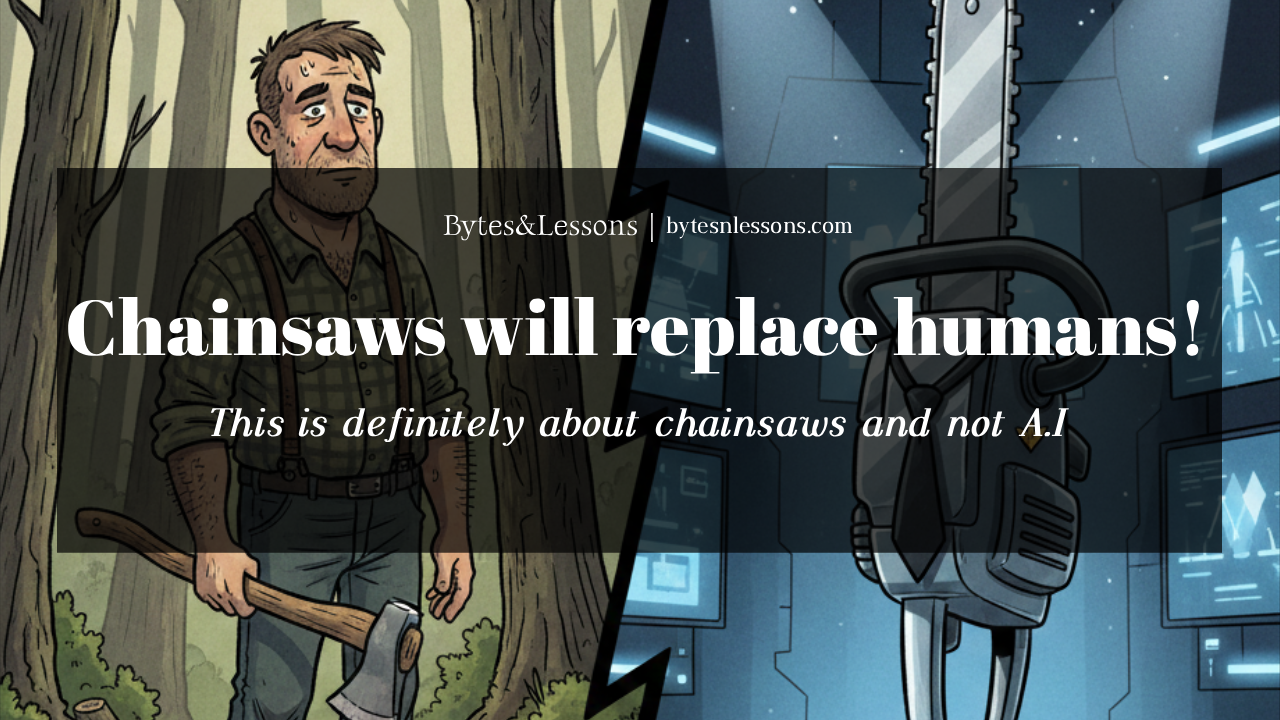
It’s the early 1900s. You are in the lumber industry. You and your employees use axes to cut down trees in the forest. In a week, you can fell 10 trees each.
You make decent money, demand meets supply, work is stable, and you can pay your lumberjacks with no problem.
Now it’s 1926. The electric Chainsaw has been invented. Everyone is talking about it, including your competitors. Chainsaw company CEOs are telling you to adopt chainsaws or perish. You have heard stories of how one chainsaw-bro fell 100 trees overnight.
Now you start panicking, your best lumberjacks start panicking, it’s chaos out there, and the “Something big is happening” Twitter article you read a week ago didn’t make you feel any better.
The facts
Don’t panic, I’m here to break it down, but first, let’s look at the facts:
- Buying more chainsaws does not guarantee an increased demand for wood.
- You still need a senior lumberjack to guide the chainsaw operations. They are not cheap.
- The chainsaws are not cheap either. The best models can cost up to $200/month/employee. Also, they suck up a lot of electricity and many gallons of water
- Operating the chainsaw still requires technical expertise. It’s not as simple as advertised.
- After cutting a tree with a chainsaw, you still need to review if it was cut to specification. Only an expert can do this. Again, experts are not cheap.
- People still prefer axe-chopped wood; they say all chainsaw-chopped wood looks soulless and identical. The kids these days are calling it “chainsaw-slop.”
- Even Small changes in company workflows take time, and incorporating a big change like chainsaws into your entire workflow will neither be cheap nor happen overnight.
- The same lumberjacks you laid off are the ones who buy your wood. And Economics proves that spending decreases when people have less money.
Conclusion
It’s an indisputable fact. Chainsaws help you cut more wood with fewer lumberjacks. Potentially increasing your profit. However, this same chainsaw also introduces some problems that eventually cancel out MOST of its productivity. These problems end up creating brand new industries whose sole purpose is to mitigate the issues caused by chainsaws.
This is history repeating itself, as it did for the transportation industry. From carriage horses to steam engines to diesel engines to V8 engines to Airplanes and Jet engines. The only thing that changed was the tool for transportation, but never the drivers. In fact, the efficiency of these new tools created more demand for transportation, such that new classes of drivers, auto repair shops, spare parts dealers, washing bays, and several jobs emerged to mitigate all the problems these new tools introduced.
People only see the awesome part of a new tool at first, but when they try it for themselves, the net productivity is around 2x, not the 100x they were promised.
Chainsaw economics looks good in theory, but not in reality. This is why chainsaw adoption is still slow, and lumberjacks are not going anywhere.
Recommendations
- My advice is to think of chainsaws as a TOOL and use that tool in your AREA OF EXPERTISE.
- Focus on how using a chainsaw will improve your life now, and pay no heed to the doomsday prophets. If it helps make you productive without taking away the quality of work, then by all means, adopt it.
- The more experience you have as a lumberjack, the more chainsaws can improve your productivity and quality of work. The inverse is also true, so use chainsaws with discernment.
- Learn about how chainsaws work fundamentally. Don't let Chainsaw CEOs scare you into thinking the world is ending, and buying chainsaws is your only means of salvation.
Anticipate my new eBook on AI fundamentals, titled: TEACHING GRANDMA AI, and understand how AI works for yourself.
PS: This is a post on AI, not chainsaws. But you knew that already. 😉