TEACHING GRANDMA AI: CHAPTER 1 - THE MEANING OF AI
 Hayford Owusu Ansah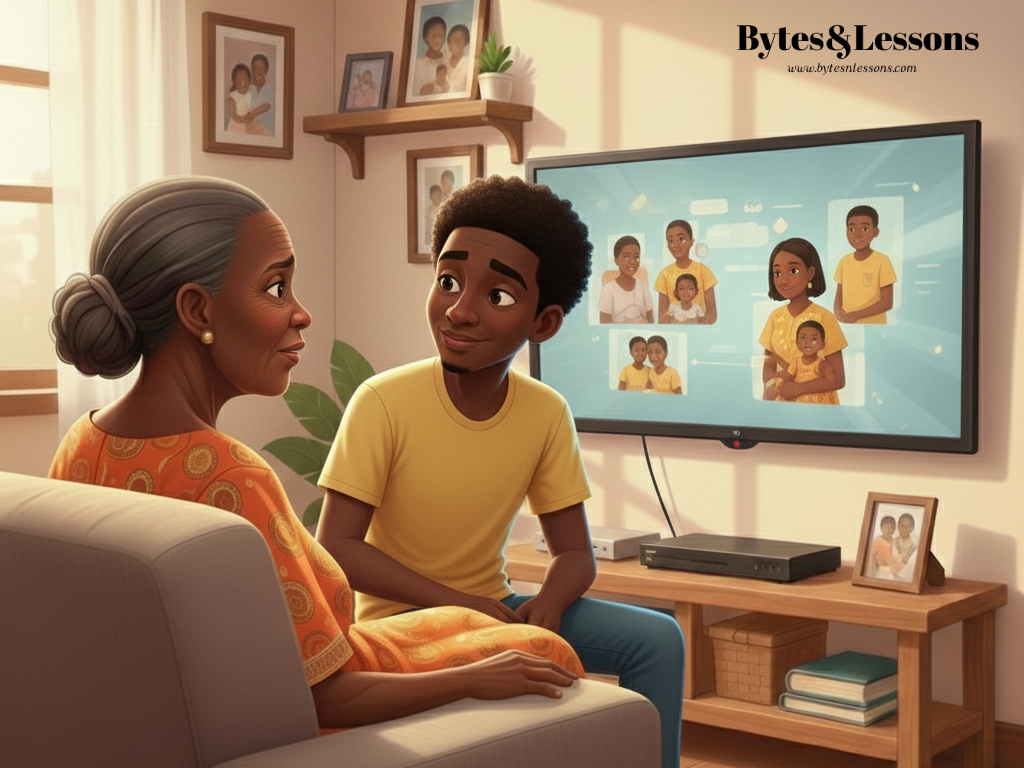
TEACHING GRANDMA THE MEANING OF AI
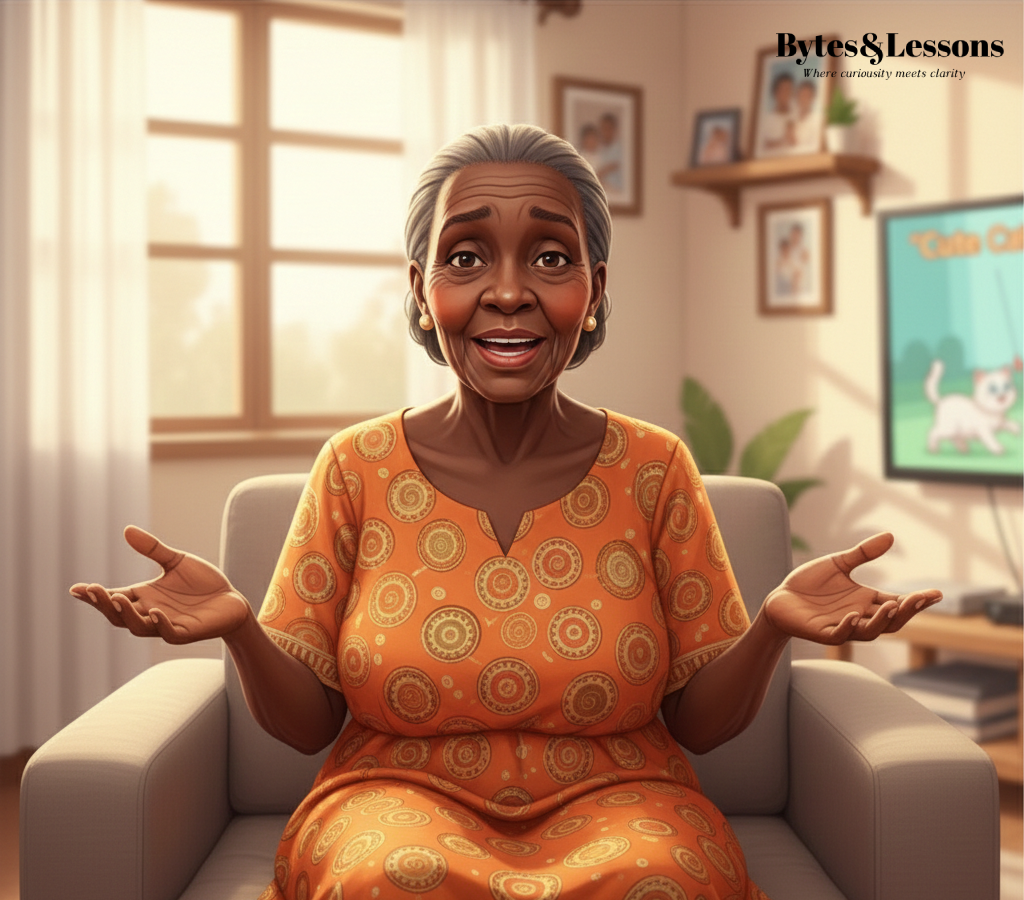
Narrator: It's almost sundown. A warm, bright light from the setting sun illuminates Grandma’s living room. Grandma is sitting alone on the living room couch, enjoying her favorite cat videos on the TV.
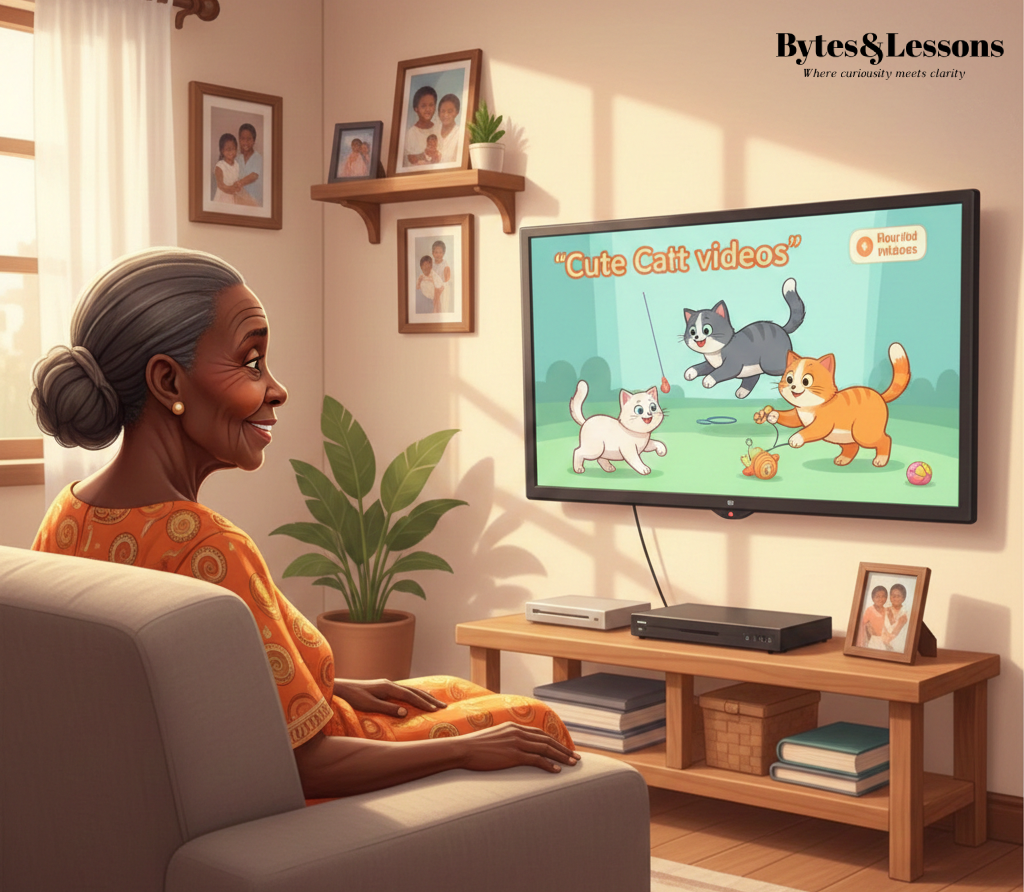
Narrator: All of a sudden, the videos of these cute, fluffy kittens end, and the next video is flooded with AI headlines, news clips, and familiar tech faces flashing by.
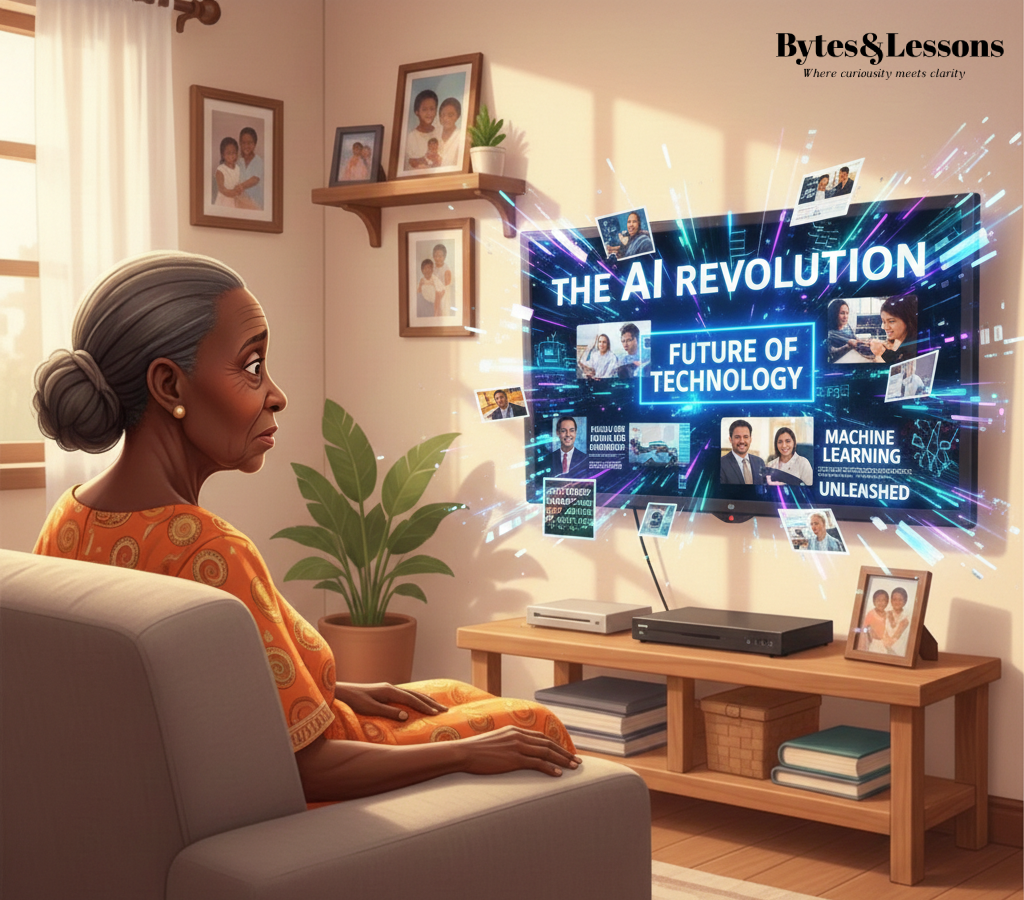
Narrator: She leans closer and calls Kofi her grandson, who is in the next room.
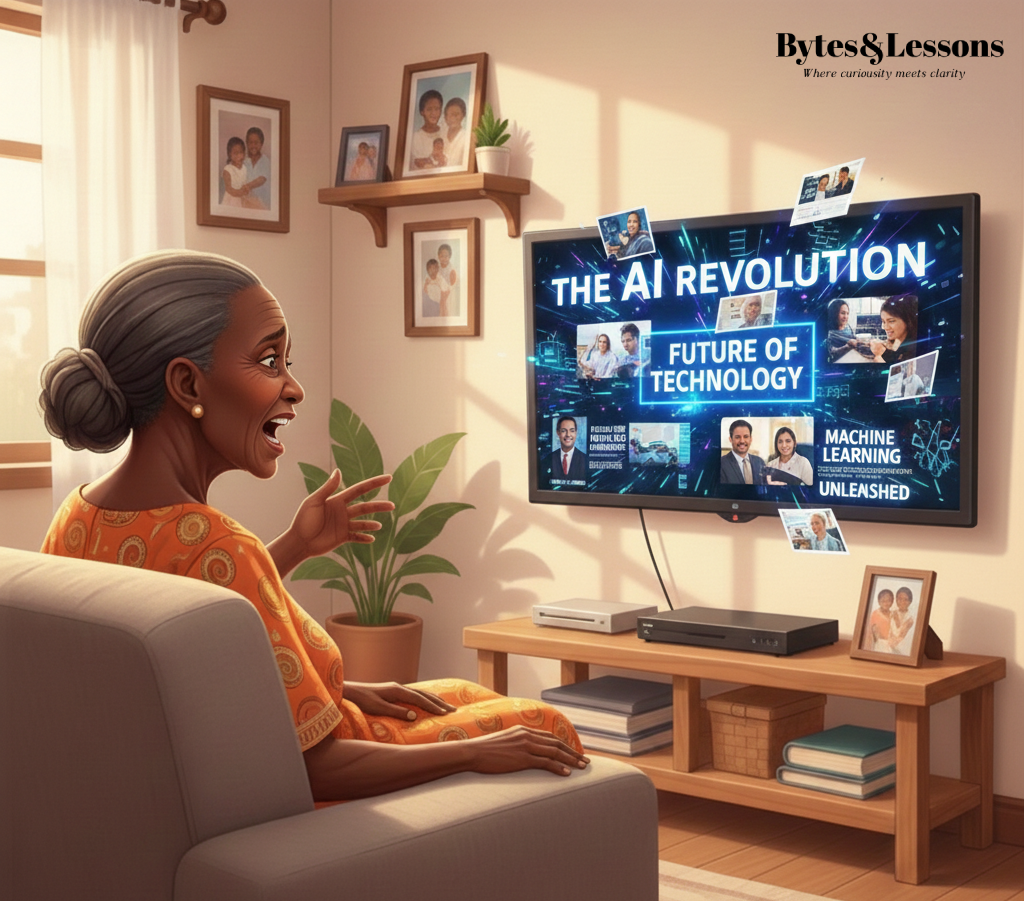
Narrator: Kofi walks in, glancing at the screen.
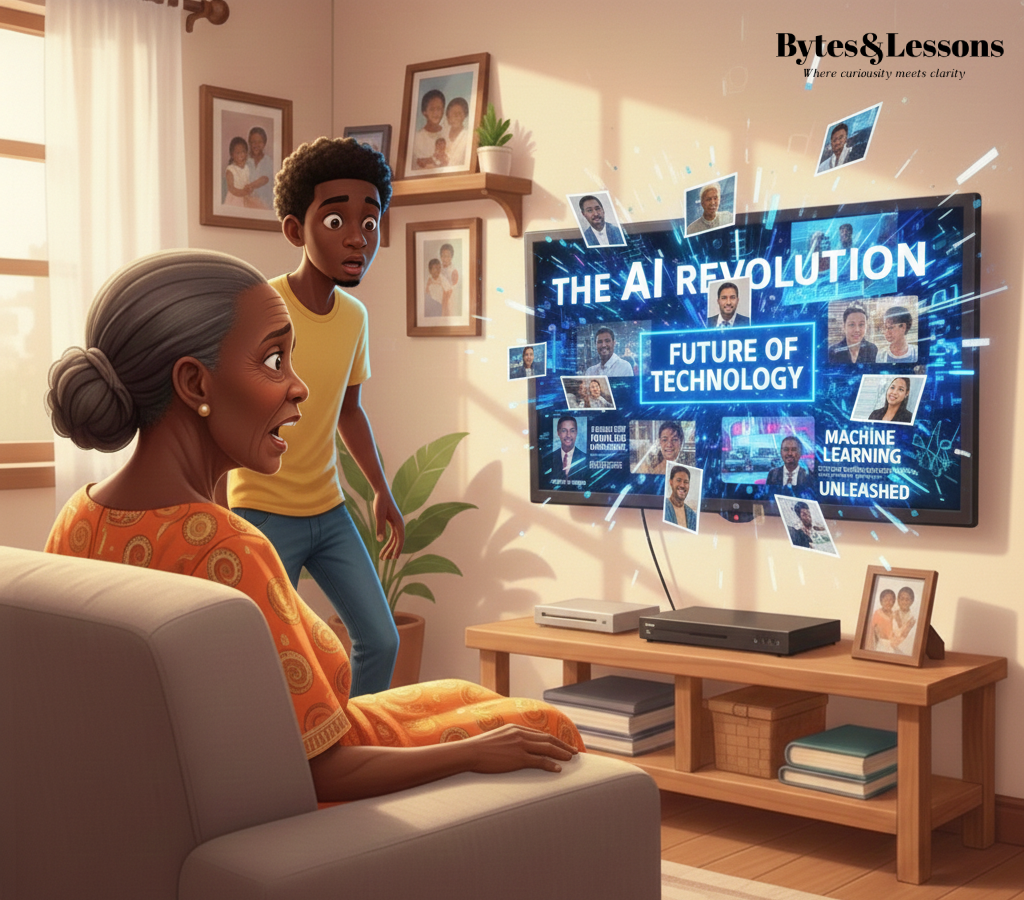
GM: What are all these that I'm seeing on my screen, and why has it taken over all my favorite cat videos
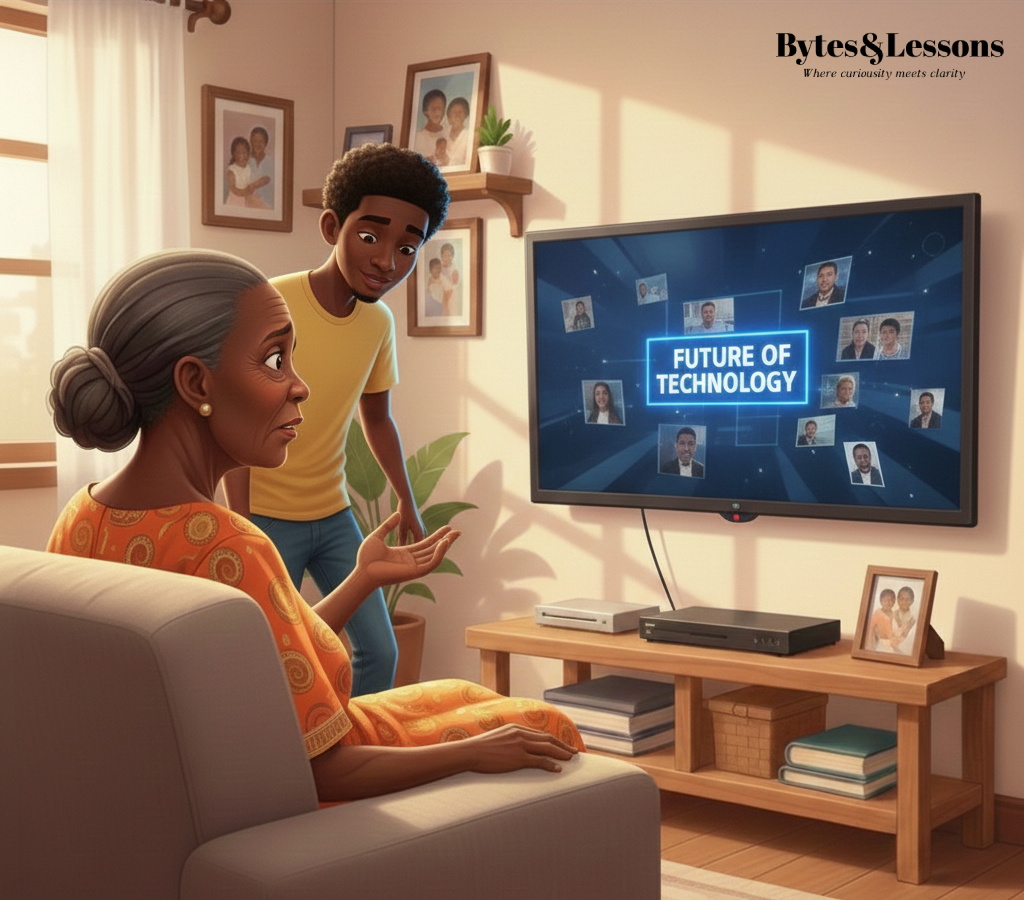
K: They are all news on AI, and you are seeing them because they are now the talk of the town.

GM: A.I? Is it short for something? It must be “Always interrupting” the way it keeps popping up everywhere.
K: Laughs. No, Grandma, let me explain what it is
G.M: ok i am listening, teach me the meaning of AI like I am 5… or 80.
Narrator: Kofi smiles and takes a seat beside Grandma
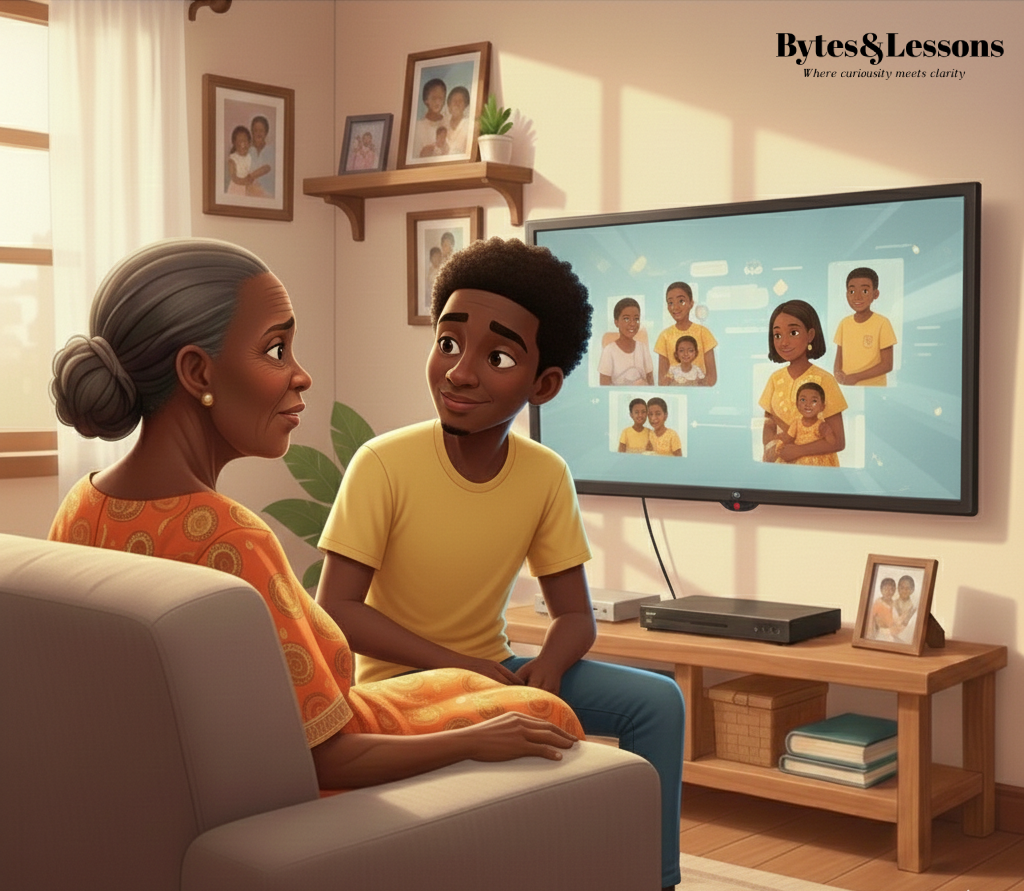
What is AI?
AI is a field in computer science that aims to enable machines reach human-level intelligence, such as learning, reasoning, planning, and decision making.
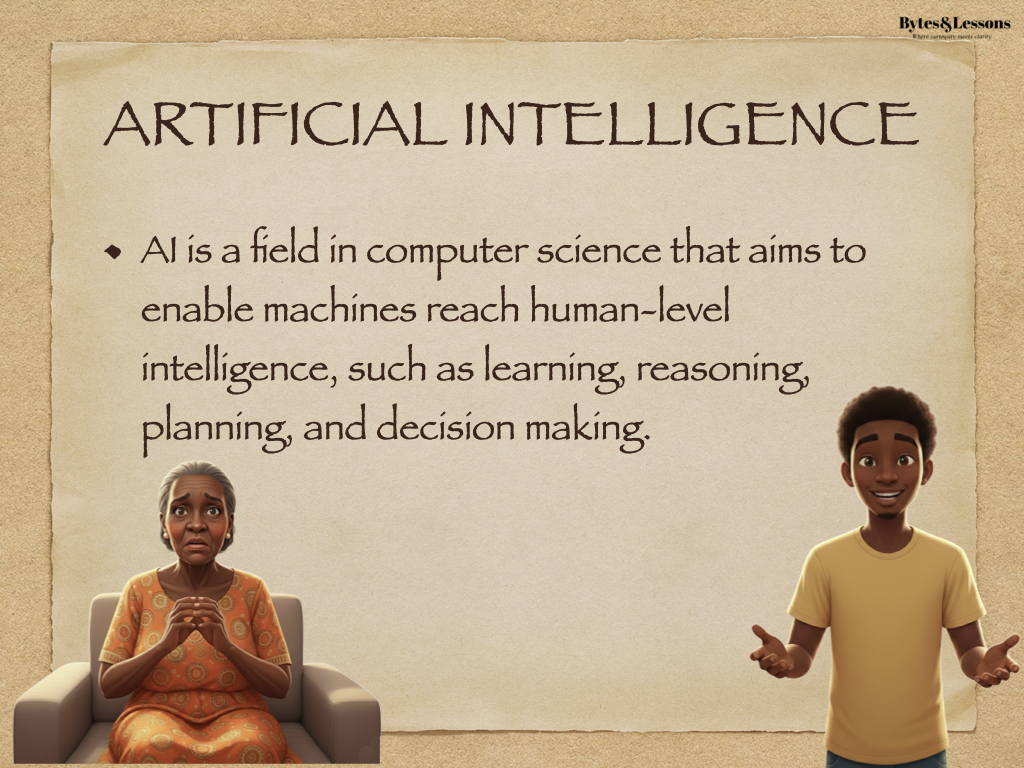
GM: So AI is not a robot stealing my pension? Thank God.
GM: You mentioned “Computer scenes” [struggles to say computer science. Kofi cuts in].
K: You mean Computer Science?
GM: Yes, Computer science, which one too is that?
K:
What is computer science?
Computer science is the theoretical study of how computers work and how they can be used to solve problems. This is a really broad field of study, and AI is just a slice of the cake.
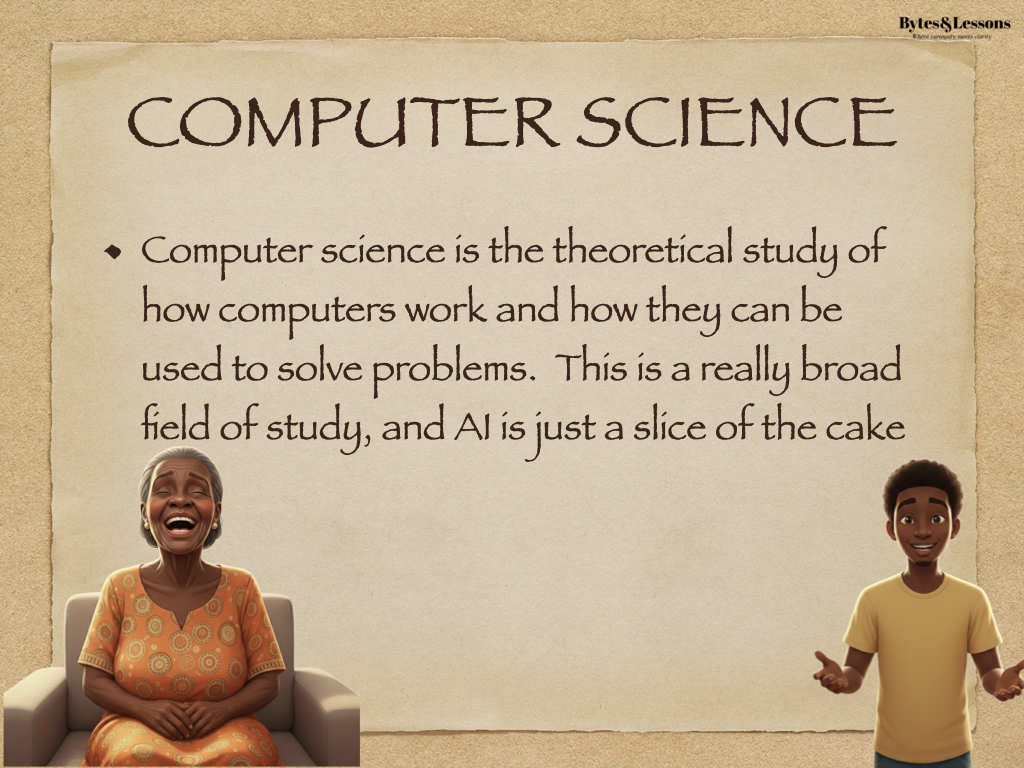
GM: So, computer science is just theory, not the TV you keep staring at all day?
K: Granny, that is my laptop, and I use it for school projects.
GM: Really, I thought you were just being lazy in there. Anyway, you said it was a broad field. Tell me more.
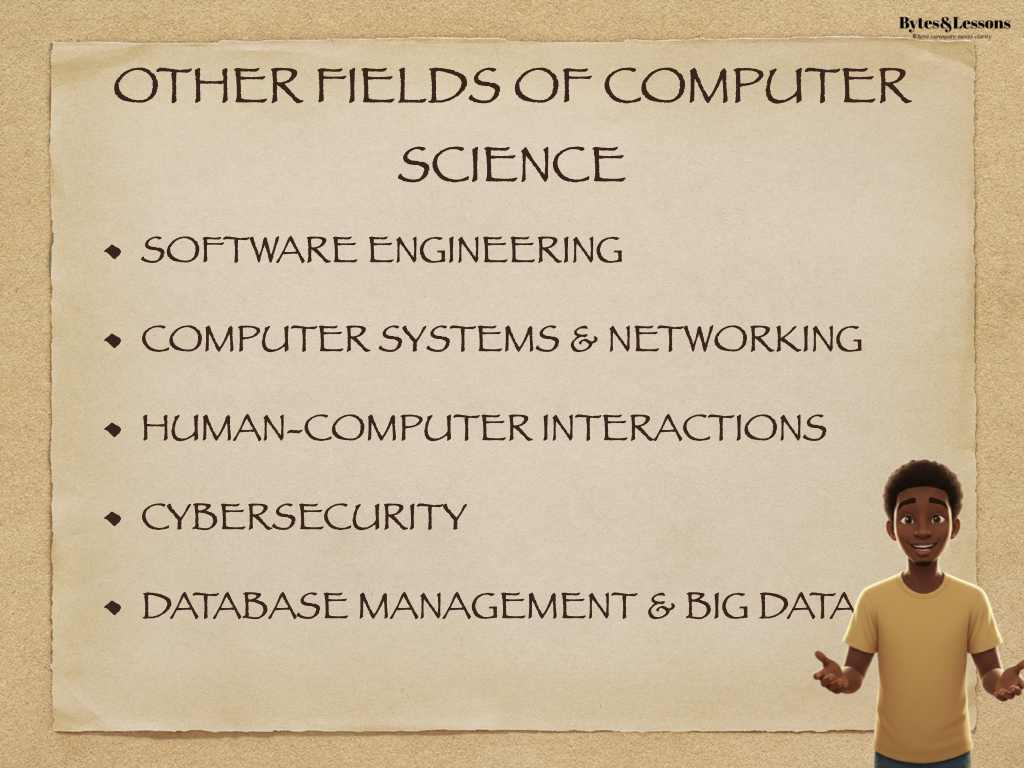
K: Yes, besides AI, there are fields like :
Other fields of Computer Science
- Software engineering: the end-to-end process that goes into designing and implementing instructions for the computer to solve specific tasks. Popular software includes: Microsoft Word, Gmail, Google Chrome, WhatsApp, and TikTok.
GM: Oh, so WhatsApp and TikTok were made by software engineers?
K: Yes. They all follow instructions to fulfill their various tasks
- Computer systems and networking: the study of how to design, build, and manage computers, and also how they can communicate with each other. A brainchild of this field is the Internet, which we are enjoying now.
GM: Internet, is it the one that allows me to talk to family members abroad?
K: Yes, you can talk to them because all the phones are networked
- Human-computer interactions: the study of how to make it easy and enjoyable for humans to interact with machines. This field bridges the gap between machine and human psychology. Some applications include:
- Graphic design,
- Web, mobile, and wearables UI/UX Designers,
- Virtual Reality,
- Augmented reality
- Hardware interface design.
GM: This is what makes it easy for us to use the software on our phones?
K: Yes, all software and hardwares
- Cybersecurity: The study of how to protect hardware, software, and data from threats. Advancements in these fields led to the creation of sophisticated anti-viruses, encryption algorithms, Access Control methods, and Network security.
GM: So this is like the police inside our phones?
K: Haha, yes
- Database Management and Big Data: A field that specializes in how to collect, process, and store data efficiently (and in large volumes) for later retrieval. Professionals in these fields include:
- Database Admins,
- Data scientists,
- Data Analysts
- Big Data Engineers.
GM: So the cabinet in which they store all our information is the database?
K: Yes, Grandma, and the administrators make sure they are secured and well-organized
There are several intriguing applications of computer science, such as robotics, game development, mobile and web apps, cloud computing, the Internet of Things (IoT), and quantum computing.
GM: My grandson, the computer scientist, I am happy to know all the fees we are paying are being put to good use. Now tell me more about this AI.
K: Ok, let me tell you more about the levels of AI based on predicted growth
GM: Ahh, so AI can grow?… so it’s like babies, teenagers, and grown adults. Just tell me which one we are before I start panicking.
K:
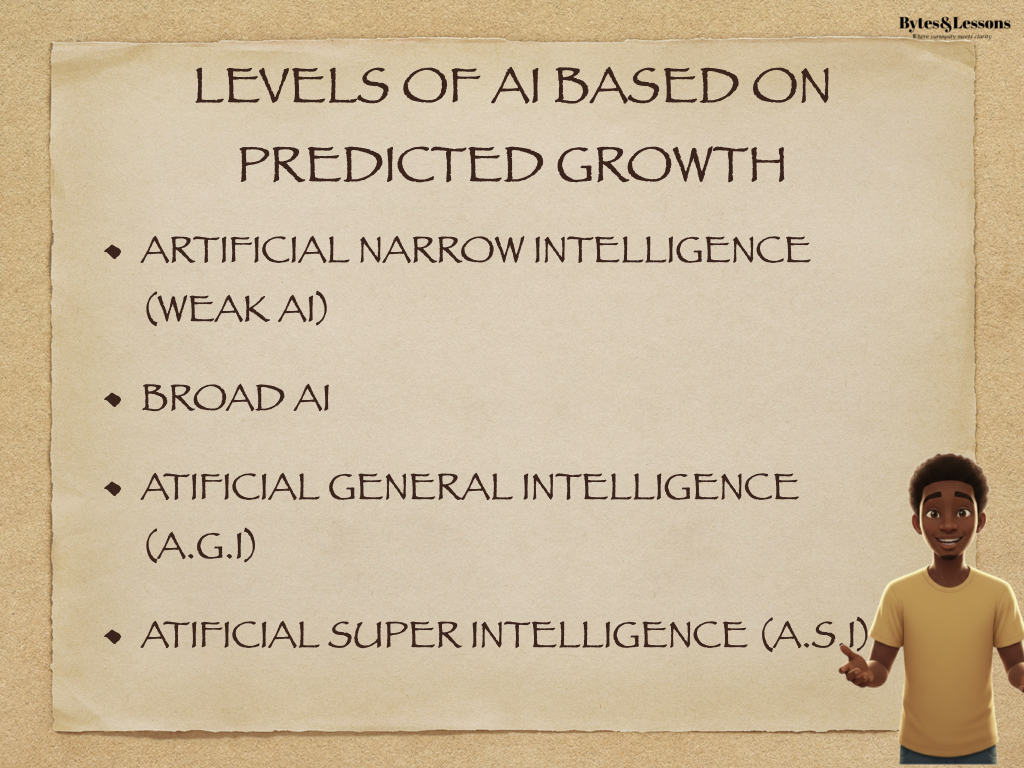
Levels of AI based on predicted growth
- Artificial Narrow Intelligence: Also known as weak AI. This is an AI that can perform one specific task. like language translation, voice recognition, image detection, or playing chess.
- Broad AI - They can perform multiple tasks across different domains like chatting, speaking, reasoning, and understanding videos. As of 2026, we are here. Examples include ChatGPT, Gemini, and Claude.
- Artificial General Intelligence, AGI - An AI with human-level intelligence. It can perform an intellectual task that a human can. <-This is the next phase of AI
- Artificial Super Intelligence, ASI - An AI that surpasses human intelligence
GM: So you are telling me this thing is still growing?
K: Yes, it is.
Food for thought
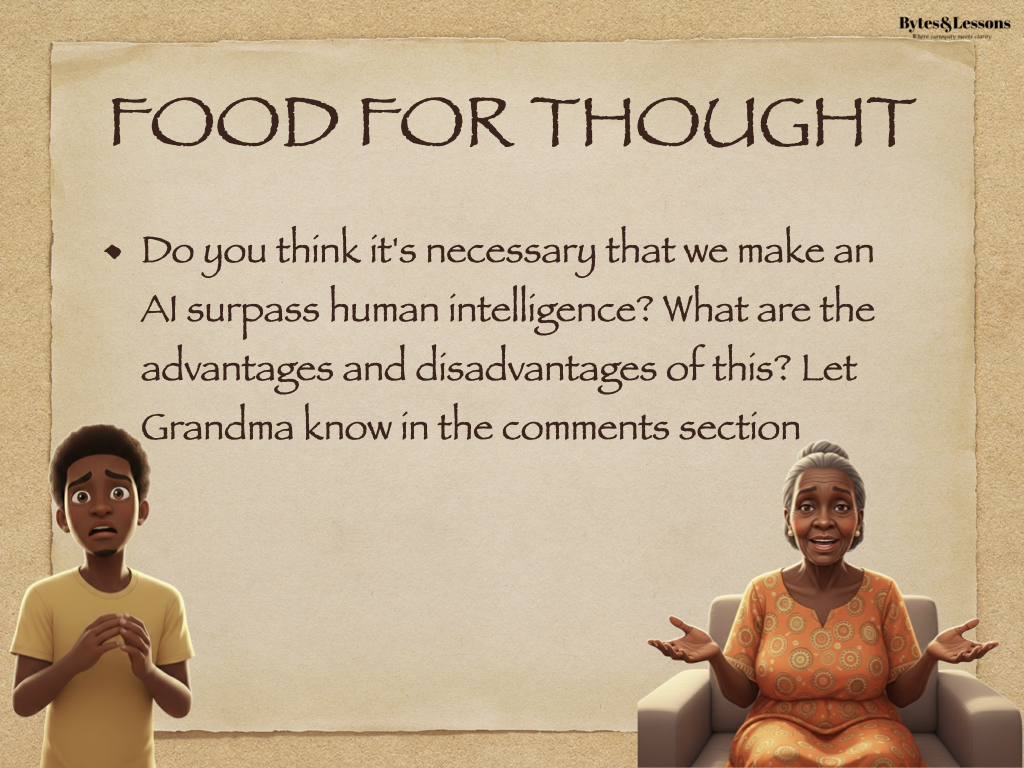
GM: Do you think it's necessary that we make an AI surpass human intelligence? What are the advantages and disadvantages of this? Let Grandma know in the comments section.
I am a writer who writes about life lessons and technology. Check out my latest book “TEACHING GRANDMA AI” on Amazon/ Selar/ Lulu.